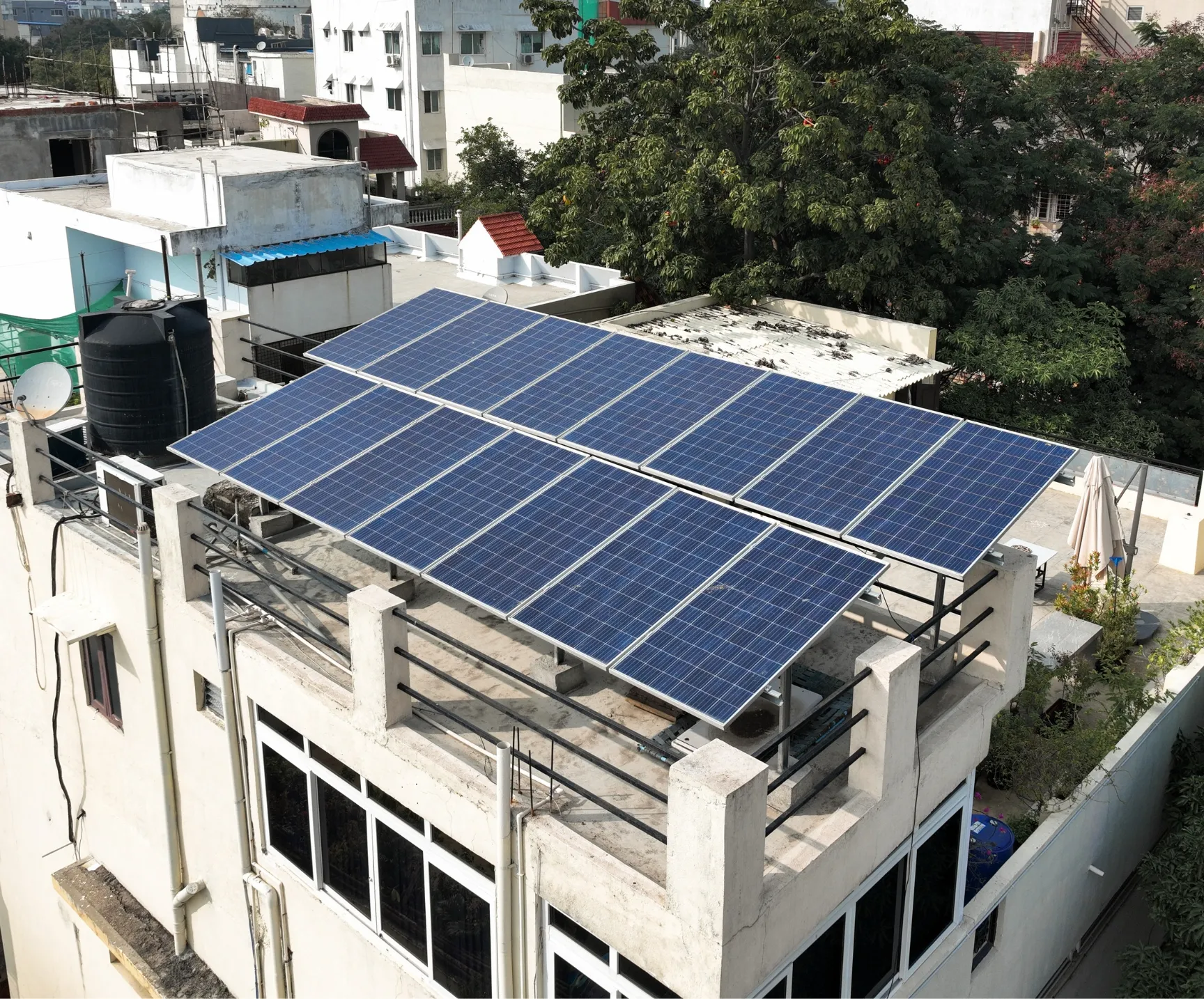
Introduction: 6 kW Solar System and Maxira Solar
This guide is designed for Indian homeowners and businesses considering a 6 kW solar system installation. It covers pricing, system components, government subsidies, installation process, financing options, and key buyer tips.
A 6 kW solar system from Maxira Solar can save you up to ₹12,000 per month on electricity bills, delivering approximately ₹30-35 lakhs in total savings over 25 years. The key benefits of a 6 kW solar system include significant money savings, reduced carbon footprint, and greater energy independence for your home or business. As a long term investment, a 6 kW solar system not only cuts your monthly expenses but can also increase your property value by 5-7%, making it a smart financial decision.
Maxira Solar is an MNRE-empanelled installer, providing certified solar solutions and full-service support across India. A 6 kW solar system is one of the most popular choices for large Indian households with monthly bills above ₹5,000. The Indian government actively supports solar adoption through subsidies and schemes, helping you recover your initial investment in just 4 to 6 years.. With a return on investment (ROI) of up to 13.3 times your upfront cost, a 6 kW solar system offers reliable, long-term financial and environmental benefits for Indian homeowners.Now that you know who this guide is for and what it covers, let's dive into the cost and price breakdown for a 6 kW solar system.
6 kW Solar System Price, Cost and Subsidy Breakdown in India
The price of a 6 kW solar system in India depends on several key factors: system size (the total capacity in kilowatts), panel type (such as mono-PERC or TOPCon), location, and the upfront cost before subsidies. System size and capacity directly determine how many panels and what size inverter you need, which impacts both the solar system price and the technical requirements for your installation. The upfront cost is the total amount you pay before any government incentives or financing options are applied.Solar system price varies by location due to differences in installation costs, local taxes, and available subsidies. For example, in 2025, the 6 kW solar panel price in India with subsidy ranges from approximately ₹2.52 lakh in Delhi to ₹3.47 lakh in Bangalore. Without subsidy, the cost ranges from about ₹3.60 lakh in Delhi to ₹4.25 lakh in Bangalore. Panel type also affects the final price—high-efficiency panels like mono-PERC or TOPCon typically cost more upfront but deliver higher energy output and better ROI over time.Most states in India offer a standard subsidy of ₹78,000 for solar systems with a capacity of 3 kW or higher under the PM Surya Ghar Muft Bijli Yojana. However, homeowners in Delhi and Uttar Pradesh receive an additional ₹30,000, bringing the total subsidy to ₹1.08 lakh for a 6 kW system. The maximum subsidy under this scheme is capped at ₹78,000 for systems of 3 kW and above in most states. How much subsidy you receive depends on your location and the current government scheme.
Summary Table: 6 kW Solar System Price Range (2025 Estimates)
City
Price Without Subsidy
Price With Subsidy
Total Subsidy Available
Delhi
3.60 Lakh
2.52 Lakh
1.08 Lakh
Pune
3.90 Lakh
3.12 Lakh
78,000
Bangalore
4.25 Lakh
3.47 Lakh
78,000
Key Facts:
The 6 kW solar panel price in India with subsidy in 2025 ranges between ~₹2.52 lakh in Delhi and ~₹3.47 lakh in Bangalore.
Without subsidy, the cost can range between ~₹3.60 lakh in Delhi and ~₹4.25 lakh in Bangalore.
Homeowners in Delhi and UP receive a total subsidy of ₹1.08 lakh for a 6 kW solar system under the PM Surya Ghar Muft Bijli Yojana.
The Indian government offers a subsidy of ₹78,000 for solar systems with a capacity of 3 kW or higher under the PM Surya Ghar Muft Bijli Yojana.
The maximum subsidy under the PM Surya Ghar Muft Bijli Yojana is capped at ₹78,000 for solar systems of 3 kW and above.
When planning your installation, always consider system size, capacity, panel type, and location to accurately estimate your upfront cost and long-term savings.
[Insert Bill of Materials (BOM) table here: include panels, inverter, mounting structure, wiring, protection devices, and optional battery storage.]
For cost components, on-grid systems are typically the most affordable, as they do not require batteries. Off-grid systems include battery storage, increasing the upfront cost but providing backup power. Hybrid systems combine both, offering grid connectivity and battery backup, and are priced between on-grid and off-grid options.With a clear understanding of costs, let's explore how government subsidies can further reduce your investment.
Government Subsidy: PM Surya Ghar Muft Bijli Yojana and CFA
To claim the central government subsidy of up to ₹78,000 for a 6 kW solar system, your installation must comply with MNRE-approved guidelines and be completed by an authorized vendor. This is a mandatory requirement for all applicants seeking the MNRE Central Financial Assistance (CFA).Some states offer additional top-up subsidies. For example, Delhi residents may receive extra support through BSES Delhi, while homeowners in Uttar Pradesh can access state incentives via UPPCL. Always check with your local DISCOM for the latest state-specific top-up details.
Eligibility Checklist for Subsidy on a 6 kW Solar System Price in India:
The system must be installed on a residential property.
Installation must comply with MNRE-approved guidelines.Only authorized vendors are eligible to install the system.
The applicant must have a valid electricity connection with the local DISCOM (e.g., BSES Delhi, BESCOM Bangalore, MSEDCL Maharashtra, TNEB Tamil Nadu, JDVVNL Rajasthan, DGVCL Gujarat).
The applicant must register for an account on the national solar subsidy portal to facilitate direct subsidy disbursement into their bank account.
After installation, the subsidy is transferred directly to your registered bank account via a secure multi-factor authentication (MFA) process. This ensures safe and transparent disbursement of funds. Homeowners installing a 6 kW solar system in Delhi and UP receive the highest subsidy of ₹1.08 lakh under PM Surya Ghar.
System Components of a 6 kW Solar System
A properly designed 6 kW solar system cuts your electricity bills by ₹8,000-12,000 monthly across most Indian cities. Maxira Solar installs systems with five critical components that deliver 25-year guaranteed performance. Each component directly impacts your return on investment and energy independence goals.
Solar Panels
High-efficiency panels generate 24-30 units daily, worth ₹240-360 in savings at current DISCOM rates. You need 15-20 panels for 6 kW capacity—our 400W Topcon modules require exactly 15 units. BIS-certified panels deliver 22% efficiency ratings, crucial for maximizing output during Delhi's winter months or Bangalore's monsoon season.
Inverter
String inverters convert DC to AC power at 97.5% efficiency, directly impacting your monthly savings. A 6 kW-rated inverter handles peak generation while hybrid models future-proof your investment for battery storage. Maxira Solar recommends hybrid inverters for BSES Delhi customers experiencing frequent power cuts.
Mounting Structure
Engineered mounting systems withstand 180 kmph wind speeds, protecting your ₹3.5 lakh investment for decades. We design structures for RCC, sheet, and tiled roofs across Maharashtra's coastal winds and Delhi's temperature extremes. Proper angling increases energy yield by 15-20% compared to flat installations.
Net Metering System
Net metering credits surplus generation at full retail rates, offsetting 90-100% of your electricity bills. BESCOM Bangalore allows 10 kW export limits while MSEDCL Maharashtra caps residential exports at 10 kW. Maxira Solar handles all DISCOM approvals and meter installation within 30 days.
Batteries (Optional)
Lithium batteries store 5-7 kWh for ₹80,000-1.2 lakh, providing 4-6 hours backup during outages. Battery integration adds ₹1.5-2 lakh to system cost but eliminates diesel generator expenses. Lead-acid alternatives cost 40% less but require replacement every 5-7 years.
Maxira Solar delivers turnkey 6 kW installations with MNRE-compliant design and 5-year comprehensive warranties. Our certified engineers handle everything from DISCOM approvals to commissioning, ensuring your system generates maximum savings from day one. Regular maintenance visits maintain 95%+ efficiency throughout the system's 25-year lifespan.Now that you understand the key components, let's see how many panels you'll need for a 6 kW system.
How Many Solar Panels for a 6 kW Solar
To determine how many solar panels you need for a 6kW solar system, you must consider the total system capacity and the capacity (wattage) of each panel. The total system capacity is 6,000 watts (6 kW). Divide this by the capacity of your chosen solar panel to get the panel count.
High-efficiency panels are typically defined as solar panels with a wattage rating between 350W and 450W, offering higher output per panel and better space utilization. A typical 6kW setup consists of 15-20 high-efficiency solar panels, each approximately 350W-450W. Alternatively, a 6 kW solar system typically requires around 12 solar panels, assuming each panel has a capacity of 540 watts.
For example:
With 300W panels: 6,000W ÷ 300W = 20 panels
With 400W panels: 6,000W ÷ 400W = 15 panels
With 540W panels: 6,000W ÷ 540W ≈ 12 panels
A typical 6kW solar system setup consists of:
15-20 high-efficiency panels rated between 350W and 450W each,
orAround 12 panels if you use 540W modulesHigher capacity panels reduce the total number of panels required and can save roof space.
For a standard RCC flat roof, arrange panels in rows with adequate spacing for maintenance and minimal shading. A 6kW system usually needs about 30-40 square metres of shadow-free roof area, depending on panel size and layout. The right panel count ensures your 6 kW solar system delivers maximum output throughout its 25-year lifespan.
How Much Electricity Will a 6 kW Solar System Produce?
A 6kW solar system typically produces between 17 and 22 kWh of electricity per day, depending on your location and local weather conditions. Over a year, the system produces approximately 8,400 to 8,700 units (kWh) of electricity. The actual output of a 6kW solar system can vary based on factors such as sunlight availability, shading from nearby objects, and the orientation and tilt of the panels.System losses—including shading, inverter inefficiencies, and temperature effects—can reduce the total electricity your system produces. These losses are a normal part of every solar installation and should be considered when estimating your expected savings.Solar irradiation (the amount of sunlight received) and ambient temperature also impact how much energy your system produces in different regions. For a more precise estimate, refer to the table below showing average daily and annual generation for major UK cities.Understanding your system's production capacity helps you determine if a 6 kW solar system can power your entire house, which we discuss next.
Can a 6 kW Solar Power an Entire House?
A 6 kW solar power system, often installed as a rooftop solar system, is ideal for Indian households with high energy needs. This system size can effectively power a large 3-4 BHK home, supporting the entire household’s electricity requirements. With a 6 kW rooftop solar system, you can run multiple heavy appliances simultaneously, including air conditioners, refrigerators, washing machines, and common kitchen appliances.Additionally, a 6 kW solar system is well-suited for charging electric vehicles (EVs) at home, while still supporting multiple air conditioners and other heavy loads. For homeowners seeking full energy autonomy or backup during grid outages, pairing your 6 kW solar power system with a hybrid inverter and battery storage is recommended. This ensures uninterrupted power supply and maximizes the benefits of your rooftop solar investment.Now that you know what a 6 kW system can power, let's explore the different types of solar systems and net metering rules.
On-Grid, Grid Solar and Net Metering Rules
The three main types of 6 kW solar systems are on-grid, off-grid, and hybrid solar systems. On-grid solar systems are connected to the grid and do not have a battery bank. Off-grid solar systems are standalone systems connected only to batteries, not the grid. Hybrid solar systems are connected to both the grid and a battery bank.A 6kW solar system is a solar power setup with a total capacity of 6 kilowatts, commonly used for residential and small commercial applications. Solar systems come in three main types: on-grid, off-grid, and hybrid. An on-grid solar system is connected directly to the electricity grid and does not include a battery bank. An off-grid solar system operates independently from the grid and stores energy in batteries for use when sunlight is unavailable. A hybrid solar system combines both approaches, connecting to the grid while also using a battery bank for backup power.Net metering allows you to export excess electricity generated by your solar system to the local grid and receive credits on your electricity bill. Always verify your local DISCOM’s net metering policies and eligibility requirements before purchasing a 6kW solar system.
Net Metering Variations by State and DISCOM
Net metering policies vary across Indian states and DISCOMs, affecting how solar energy export is credited and the overall financial benefits for homeowners. It is important to check the net metering guidelines on your local DISCOM’s website—such as BSES Delhi, MSEDCL Maharashtra, or BESCOM Bangalore—to understand specific rules, application procedures, and timelines.Some DISCOMs impose export caps limiting the maximum amount of solar power you can feed back to the grid, while others use net billing systems where exported electricity is credited at a lower rate than retail. These variations can impact your solar savings and payback period.When estimating the total cost of your 6 kW solar system, factor in any applicable DISCOM fees related to net metering installation, meter replacement, or maintenance charges to avoid surprises.With system types and net metering explained, let's look at off-grid and hybrid options for those seeking backup power.
Off Grid and Hybrid Options for 6 kW Solar
For homeowners seeking backup power during outages or aiming for greater energy independence, off-grid and hybrid 6 kW solar systems are viable options. To size your battery bank correctly, consider your desired backup hours and energy requirements carefully.Lithium-ion batteries, while more expensive upfront, offer longer life, higher efficiency, and lower maintenance expenses compared to lead-acid batteries, which have a lower initial cost but shorter lifespan and higher routine maintenance.Hybrid solar systems combine the benefits of grid connectivity and battery backup, making them ideal in regions where daytime export limits restrict net metering benefits. This setup ensures uninterrupted power supply and maximizes your solar investment.Now that you know your system options, let's review the financing solutions available for a 6 kW solar system.
Financing Options for a 6kw Solar System
Financing Options for Your 6kW Solar System
Maxira Solar makes solar energy accessible with a range of flexible financing options for your 6kW solar system. Homeowners can choose from:
Zero-upfront cost plans: Start your solar journey without any initial payment.
EMI options: Spread the cost with easy monthly installments (EMIs) starting from just ₹2,500/month, making solar affordable for most households.
Solar loans: Finance your system with a solar loan to distribute the upfront cost over time while still enjoying monthly savings on your electricity bill.
Solar leases and Power Purchase Agreements (PPAs): Pay only for the solar energy you use without owning the system outright—ideal for those who want the benefits of solar without the responsibility of ownership.Maxira Solar offers all these options, including zero-upfront cost plans and EMI options starting from ₹2,500/month, to suit different budgets and preferences.
Below is a comparison table of typical loan tenures and interest rates for solar financing options:
Financing Option
Upfront Cost
EMI (per month)
Typical Tenure
Interest Rate (%)
Zero-Upfront EMI Plan
₹0
₹2,500+
36-60 months
9-14
Standard Solar Loan
10-20%
₹2,800+
36-60 months
8-13
Solar Lease / PPA
₹0
₹2,000+
60-120 months
N/A
Choose the plan that best fits your needs and start saving with Maxira Solar today.
With financing options in mind, let's walk through the installation timeline and approval process.
Installation Timeline, DISCOM Liaison and Approvals
The installation of a 6 kW solar system typically follows a structured timeline to ensure efficient setup and compliance with local regulations. The process begins with a site survey and system design, which usually takes 3 to 5 days. Following approval of the design and quotation, installation of solar panels, inverter, mounting structures, and wiring is completed within 7 to 10 days.After installation, the system undergoes commissioning, including testing and quality checks, which generally takes 1 to 2 days.
Concurrently, Maxira Solar handles all necessary approvals and paperwork with the local DISCOM (Distribution Company), including net metering application and verification. This liaison process with the DISCOM can take anywhere from 2 to 4 weeks depending on the region and the responsiveness of the utility provider.Common causes of installation delays include pending DISCOM approvals, incomplete documentation, roof readiness issues such as structural strength or shading obstacles like water tanks and antennas, and adverse weather conditions. Maxira Solar’s experienced project management team proactively addresses these challenges to minimize delays and ensure a smooth installation experience.
By following this timeline and managing DISCOM liaison efficiently, homeowners can expect their 6 kW solar system to be fully operational within 4 to 6 weeks from project initiation, unlocking significant solar savings and energy independence.With installation timelines clear, let's discuss maintenance, warranties, and ongoing costs.
Maintenance, Warranties and O&M Costs
For a 6kW solar system, typical warranty durations are 25 years for solar panels, 5 to 10 years for inverters, and 5 to 7 years for batteries. Annual operation and maintenance (O&M) costs generally range from ₹5,000 to ₹10,000, with panel cleaning recommended at least 3 to 4 times per year to maintain optimal efficiency. Always expect a service SLA (Service Level Agreement) from your installer that guarantees response within 48 hours for critical issues.Regular maintenance is essential to ensure accurate ROI calculations and long-term system performance. Routine cleaning and timely servicing help keep your system operating at peak efficiency, which is critical for reliable return on investment estimates over the system’s lifetime. Always verify warranty coverage and local service support to accurately assess your potential returns.With maintenance and warranties covered, let's examine the savings, ROI, and impact on your electricity bills.
Savings, ROI, Payback and Electricity Bills Impact
A well-installed 6 kW solar system saves Indian homeowners ₹8,000–₹12,000 every month on electricity bills every month. For example, if your average grid tariff is £0.30 per kWh and your 6kW system generates around 5,400 kWh per year, you could save approximately £1,620 annually on your electricity costs. Over 25 years, accounting for a 0.5% annual panel degradation and a 3% yearly grid tariff escalation, your total savings could exceed £50,000.With net metering, you can save even more money. Net metering allows you to export excess electricity back to the grid and receive compensation, which can significantly accelerate your payback period. Most homeowners with a 6kW solar system achieve a payback period of just 4-6 years, after which the system continues to generate free electricity for over 25 years.In addition to saving money, a 6kW solar system reduces your carbon emissions by 6-7 metric tons annually—equivalent to planting thousands of trees each year. Compared to continuing to pay rising grid electricity bills, investing in a 6kW solar system offers substantial long-term financial and environmental benefits.With a clear picture of savings and ROI, let's move on to the step-by-step application process for subsidy, net metering, and commissioning.
How to Apply: Steps for Subsidy, Net Metering and Commissioning
Subsidy Application Process
Applying for the government subsidy, net metering, and commissioning your 6 kW solar system involves a clear, step-by-step process to ensure you receive financial benefits and a smooth installation experience.
1.Register on the official PM Surya Ghar Muft Bijli Yojana National Portal using your Aadhaar and bank details.
2.Choose an MNRE-empanelled and authorized vendor like Maxira Solar to install your system.
3.Submit the required documents, including proof of identity, property ownership or electricity connection, and the signed agreement with your installer.
4.After installation, your vendor will upload the completion certificate and other necessary documents for subsidy approval.
5.Once approved, the subsidy amount (up to ₹78,000 for 6 kW systems, or ₹1.08 lakh in Delhi and UP) is directly transferred to your registered bank account via secure multi-factor authentication.
Documentation Checklist for Bank Transfer Subsidy
Aadhaar card copy
Bank passbook or cancelled cheque
Electricity bill copy
Installation agreement and invoice from the authorized vendor
Completion certificate from the installer
PAN card copy (if required)Any other documents specified by your local DISCOM or subsidy portal
Commissioning and Meter Exchange
After installation, your vendor will coordinate with the local DISCOM for net metering approval.
The existing electricity meter will be replaced or upgraded to a bi-directional net meter to record both consumption and solar export.
The commissioning process includes system testing, quality checks, and final approval by the DISCOM.
Once the net meter is installed and commissioned, you can start generating solar power and enjoy credits for excess electricity exported to the grid.
Maxira Solar manages the entire subsidy application, net metering liaison, and commissioning process, ensuring hassle-free installation and timely subsidy disbursement.With the application process outlined, let's review the most common mistakes and a buyer checklist to ensure a successful 6 kW solar installation.
Common Mistakes and Buyer Checklist for 6 kW Solar
Buyer Checklist
Always size your 6 kW solar system based on your actual household electricity consumption to avoid undersizing and poor ROI.
Verify that your installer is MNRE-empanelled and uses only BIS-certified components for safety and subsidy eligibility.
Request a detailed Bill of Materials (BOM) with model numbers for all major components, including solar panels, inverters, and mounting structures.
Select the right panel type for your system. High-wattage mono-PERC or TOPCon solar panels are recommended for a 6 kW solar system due to their superior efficiency and higher power generation, which directly impact your system's performance and return on investment.
Inspect your rooftop for obstructions such as water tanks, AC units, or antennas. These can cast shadows or occupy valuable space, reducing sunlight exposure and affecting the optimal placement and output of your solar panels.
With these tips in mind, let's see why Maxira Solar is the right choice for your 6 kW solar system.
Why Choose Maxira Solar for Your 6 kW Solar System
Maxira Solar provides comprehensive end-to-end handling of the PM Surya Ghar Muft Bijli Yojana subsidy and DISCOM liaison for your 6 kW solar system installation. This means they manage everything from site survey and system design to installation, paperwork submission, and coordination with local electricity distribution companies such as BSES Delhi, BESCOM Bangalore, and MSEDCL Maharashtra. Their expert team ensures that the subsidy application complies fully with MNRE-approved guidelines, facilitating a smooth approval process and direct bank transfer of up to ₹78,000 in central financial assistance, with additional state subsidies where applicable.
Maxira Solar also offers 25-year performance guarantees on their solar panels, providing homeowners with long-term assurance of system reliability and sustained energy production. This warranty underlines their commitment to quality and durability, helping customers maximize their return on investment over the system's lifespan.
To further build confidence, Maxira Solar features local project case studies and customer testimonials showcasing successful 6 kW solar system installations across India. These real-world examples highlight their expertise in delivering high-performance solar solutions tailored to diverse regional conditions and customer needs.With Maxira Solar's expertise established, here's how you can get started with a free quote and site survey.
Get a Quote from Maxira Solar (Call To Action)
To help you take the next step toward energy independence, Maxira Solar offers a free site survey to evaluate your rooftop’s suitability for a 6 kW solar system. During this survey, expert technicians assess your roof space, shading, structural strength, and sunlight availability to design an optimal solar solution tailored to your needs. Additionally, Maxira Solar provides a customized EMI simulation and savings estimate, allowing you to understand your monthly payments alongside potential electricity bill reductions. For your convenience, contact links and regional DISCOM support options are readily available, ensuring smooth coordination for subsidy applications, net metering approvals, and installation processes across India.